
—— WOOD SANDING MACHINE SERIES
Industrial Wood Sanding Machines for Panels, Profiles & Solid Wood
Compare LINKYOU wide-belt profile, four-side, and modular profile sanding machines by workpiece shape, the areas that need sanding, and your target finish. Share your drawings or workpiece photos so we can review a suitable configuration.
- Panel surfaces
- Long components
- Profiles and grooves
18+ Years
Industry Experience
Reliable Quality
CE Certified
Global Service
100+ Countries
Expert Support
Quick Response
- Quick Answer
“What Does an Industrial Wood Sanding Machine Do?
Industrial wood sanding machines remove or refine material on selected surfaces before the next manufacturing step. Broad panel faces, narrow components with several exposed sides, and shaped details need different contact methods; start with the workpiece and required finish, then choose the machine family.
Wide-belt profile sanding focuses on broad panel workpieces
Four-side sanding handles long components on several sides
The modern profile sanding combines units for compatible shaped surfaces
- Machine Series
Compare the LINKYOU Wood Sanding Machine Series
The right starting point is the geometry of your workpiece. Review the three machine routes below, then confirm the sanding zones, material, and finish requirements on the product page or through a configuration review.

SW1300 Wide Belt Profile Sander
For broad door, cabinet-front, and profiled panel workpieces with flat areas and compatible raised or recessed details. Sanding-unit selection depends on the surface geometry and target finish.
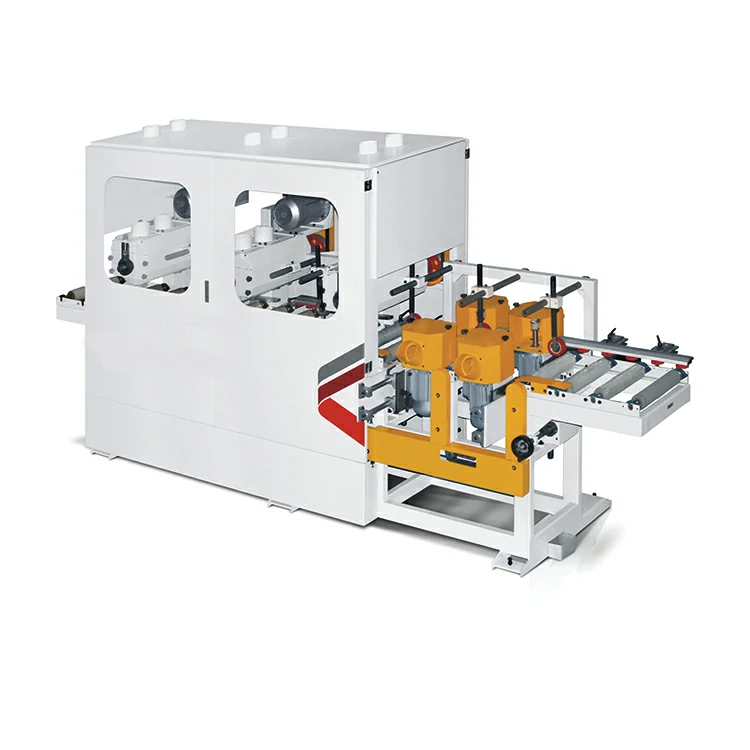
SW350DM-W4C5 Four Sides Sander Machine
For long solid-wood parts, moldings, rails, and door components that require sanding on multiple sides during a continuous feed process. It is not the default choice for broad flat panels.

SW1300-PCC Modular Combined Profile Sander
For workpieces with flat, grooved and contoured areas where different abrasive contact directions may be needed. E, C and P sanding units are arranged against a confirmed workpiece and surface target.
Not Sure Which Sanding Route Fits?
Send a workpiece photo or drawing, material, dimensions, and the faces that need sanding. We can help narrow the machine family before discussing a quotation.
- Key Sanding Capabilities
Which Sanding Tasks Do These Machines Address?
A useful comparison separates broad-surface contact, shaped-surface contact, and multi-side access. These are selection categories, not a promise that every listed model performs every operation.

Broad Panel Surfaces
Start with the SW1300 route when a door or panel face is the main work area; confirm any raised, recessed or coated zones with a sample.

Profiles, Grooves and Edges
Review the SW1300-PCC unit layout when abrasive contact must follow several surface directions on a shaped component.

Multiple Sides of Long Parts
Review the SW350DM-W4C5 when the upper, lower, and side surfaces of a long component must be prepared in a continuous pass.
- Applications
Where Do Wood Sanding Machines Fit in Production?
Match the machine to the actual surface to be treated—not only to the name of the finished product. The same door or piece of furniture may require different sanding steps at different stages.

Furniture Panels and Cabinet Fronts
Identify the main face, edges, and any routed details; confirm material and required finish before choosing a panel or profile route.

Wood Doors and Door Components
Separate broad door faces from narrow rails, stiles, and trim. Their geometry can point to different machine families.

Solid-Wood Strips and Mouldings
For long profiles, specify which faces and grooves need contact and the minimum part length before reviewing four-side or modular profile sanding.

Surface Preparation Before Finishing
Define whether the goal is bare-wood preparation, sanding between approved process stages, or a specific visual texture. Coated and veneered samples require separate compatibility confirmation.
- How to Choose
How Do You Choose the Right Wood Sanding Machine?
Start with a representative workpiece, the surface you need to sand, and the desired result after sanding. Then check dimensions, planned throughput, and the available line interfaces before selecting a model.
Selection Factor
What to Consider
Guidance
Buyer Should Provide
Workpiece Material
Solid wood, MDF, plywood, particleboard, veneer, or coated surface.
Material and surface construction affect abrasive selection and machine configuration. Compatibility should be confirmed by the model.
Material name, coating or veneer information; provide a sample when the surface is sensitive.
Surface Geometry
Flat surfaces, grooves, curves, profiles, edges, or multiple longitudinal sides.
The sanding contact method must match the areas that actually need sanding.
Mark the sanding areas on a photo or drawing.
Workpiece Dimensions
Minimum and maximum length, width, and thickness.
The complete size range must fit the machine’s working and feeding range.
Minimum and maximum L × W × T, including part-to-part variation.
Sanding Stage & Surface Target
Raw wood, intermediate sanding, primer sanding, profile refinement, or preparation before finishing.
The sanding stage and required result determine the abrasive sequence and sanding-unit configuration.
Current surface condition, required result, and a reference sample if available.
Production Demand
Pieces per hour/shift, feeding rhythm and production volume.
Catalog feed speed does not automatically equal actual production output.
Target output, feed direction, and operating pattern.
Site & Integration
Voltage, dust extraction, floor space, and upstream/downstream equipment.
Site conditions determine whether the machine can be installed and integrated into the existing line
Voltage, dust-extraction provision, layout, and connected equipment.
Have a Workpiece and a Target Finish?
Send the size range, photos or drawings, and desired production rate. We will review the information needed to discuss a suitable model and sanding-unit arrangement.
- Working Principle
How Do Conveyor-Fed Wood Sanding Machines Work?
A workpiece is guided through a selected sequence of abrasive contact points. The contact method and unit position determine which surfaces can be reached; the operator must then evaluate the result against the actual sample and finish requirements. The three machine families do not share one identical sanding mechanism.

Simplified Belt-Sanding Principle
Conceptual illustration. Actual sanding-unit arrangement varies by machine model.
Feed and Support
Review how each workpiece is presented, held, and conveyed, especially when it is narrow, short, or profiled.
Abrasive Contact
Match the selected belt, roller, brush, or other confirmed unit to the actual area requiring sanding; do not infer an optional unit from a generic illustration.
Output Inspection
Check the treated faces for the specified result and adjust the process through sample review before locking the production configuration
- Production Line Integration
How Does a Sanding Machine Fit into the Production Line?
A sanding machine can operate as a standalone unit or as part of an automated production line. The upstream loading and feeding stages may be similar, whereas the sanding route should be selected based on the workpiece geometry, required sanding surfaces, and the production process.

Conceptual workflow — the sanding route, loading method, dust extraction, and downstream equipment are configured separately according to the actual project
Route A — Four-Side
Sanding
SW350DM-W4C5
For long solid wood components that require sanding on multiple longitudinal surfaces during continuous feeding.
- Mouldings Frames
- Flooring Components
- Long Solid Wood Parts
Route B — Combined Profile Sanding
SW1300-PCC
For profiled components where grooves, edges, curved areas, and flat surfaces require different sanding-contact directions.
- Profiled Doors
- Cabinet Fronts
- Decorative Components
Route C — Wide-Belt Surface Sanding
SW1300
For wide panels and doors where the main sanding task is on broad accessible surfaces and compatible profile areas.
- Wood Doors
- Cabinet Panels
- Wide Decorative Panels
- Models & Technical Data
Which LINKYOU Sanding Model Fits Your Workpiece?
Use this table for an initial application match, not as a final quotation specification. Exact workpiece limits, sanding units, electrical requirements, and achievable finish must be confirmed against the requested configuration.
Selection Factor
Starting fit
Published figures
Confirm before quotation
SW1300
Broad door, cabinet-front, and profiled panel workpieces
Detailed values are intentionally omitted here while the child page is checked
Actual unit arrangement, size range, material, and target finish
SW350DM-W4C5
Long solid-wood parts and moldings requiring several treated sides
Child page lists width 50–350 mm max. Feed thickness: 120 mm (min. length 400 mm, and feed speed 5–15 m/min
Verify these values on the quotation and against representative parts
SW1300-PCC
Compatible flat, grooved, and contoured surfaces
E / C / P unit families are described on its product page
Unit order, contact zones, size range, and material
A Speed Figure Is Not Line Capacity
Published feed speed is one machine setting. Real output also depends on part length, gaps, handling, sanding sequence, and inspection. Request a process review rather than converting metres per minute directly into a guaranteed pieces-per-hour rate.
- Optional Units & Customization
Which Sanding Units and Configuration Details Need Review?
Unit type and position are determined by the workpiece surface and the finish required. Some items may be available only on a particular model or in a confirmed quotation; the list below is a discussion guide, not a universal standard equipment list.
Profile Contact and Unit Sequence
For SW1300-PCC, review the E sanding wheel, C straight roller, and P rotating roller arrangement against the actual faces, grooves, and contours.
Abrasive and Surface
Target
Agree on the sample, surface condition, and desired finish before discussing abrasive type, grit progression, or contact pressure.
Feeding, Transfer and Site Conditions
Confirm part support, feed direction, voltage, extraction, and any proposed upstream or downstream transfer as part of the specific configuration.
- FAQ
Frequently Asked Questions About Wood Sanding Machines
Find answers on machine selection, suitable workpieces, sanding results, and quotation requirements. Confirm the proposed configuration against your actual workpiece.
Which LINKYOU sanding machine should I choose?
Review the SW1300 for broad panels and wood doors, the SW1300-PCC for sanding-unit layouts matched to profiled surfaces, and the SW350DM-W4C5 for several longitudinal faces of long components. Start with the workpiece shape and sanding areas, then check dimensions and the required finish.
Can the machines sand MDF, veneered panels or primer-coated surfaces?
Suitability depends on the selected model, sanding units, and surface condition. Provide the panel construction, veneer thickness, or coating details, together with the required finish. Agree on the permitted removal and protected areas, and use a representative sample to assess compatibility before confirming the configuration.
Can these machines calibrate panel thickness?
Profile sanding and thickness calibration are different tasks. If you require controlled removal or a specified final thickness, state those targets and confirm that the proposed machine has the appropriate calibration units. Do not assume that every profile or brush sander provides a verified thickness-calibration function.
Can the machine sand grooves, curves and recessed details?
Suitable sanding units can contact accessible profiled areas, but reach depends on the opening, depth, shape, and contact direction. Deep recesses or sharp internal corners may require additional work or a manual touch-up. Mark the required areas on a drawing and verify their coverage on a sample.
How are the sanding units and abrasives selected?
Match the sanding units to the workpiece geometry and required contact directions. Select the abrasive type and grit sequence based on the material, starting surface, and the next finishing step. The quotation should identify the installed units and their sequence, with process settings checked against a representative sample.
Can my workpiece be tested before ordering?
Discuss a representative sanding test with LINKYOU before finalizing the configuration. Confirm availability, sample quantity, shipping arrangements, and any charges. Review the target sanding areas, surface finish, edge condition, and dimensional change, and record the abrasives and settings used for the test.
Can the sander connect to an existing production line?
Integration requires a review of workpiece dimensions and weight, feed direction, transfer height, production rhythm, and control interfaces. Define the upstream and downstream operations, and confirm the supply scope for conveyors, loading, turning, stacking, and dust extraction. These components should be specified separately in the proposal.
What should I send for a machine recommendation and quotation?
Start with a clear photo of the workpiece, material, size range, sanding areas, current surface, and required finish. Add estimated output, destination electrical supply, and any line-connection needs when available. Detailed drawings or samples can follow after the initial review; you do not need to know the machine model first.
- Technical Inquiry
Tell Us About Your Sanding Project
Send the workpiece and the result you need. You can begin with a photo and a few dimensions; drawings and process details can follow when available. We will review the application before discussing a model and quotation.
Material and incoming L × W × TFinished section or cutting patternCapacity target and connected equipment
Get a Machine Recommendation
Phone
+0086-13702626203
shundefengyue@163.com
+0086-13702626203
Address
Shunde, Foshan, Guangdong, China
Explore Other Woodworking Machine Series
Explore LINKYOU equipment for planing, sawing, loading, stacking, and turning. Find machines that fit your workpiece and production requirements.

Planer & Saw Machine Series
Compare wood planers, molders, rip saws, and planer-saw machines for solid wood preparation, profiling, and sizing.

High-Speed Cut-Off Saw Series
Review high-speed cut-off saws for crosscutting solid wood to length and, where configured, supporting length optimization or defect removal.

Loader & Stacker Series
Compare automatic loading, unloading, and stacking systems for reducing manual handling and connecting machines within a production line.

Automatic Flipper Machine Series
Select horizontal or vertical turning and transfer equipment according to workpiece dimensions, weight, orientation, and the next operation.