We use essential cookies to operate this website. With your consent, we also use Google Analytics to understand website usage and improve our services. You can accept, decline, or change your choice at any time. Please read our Privacy Policy.
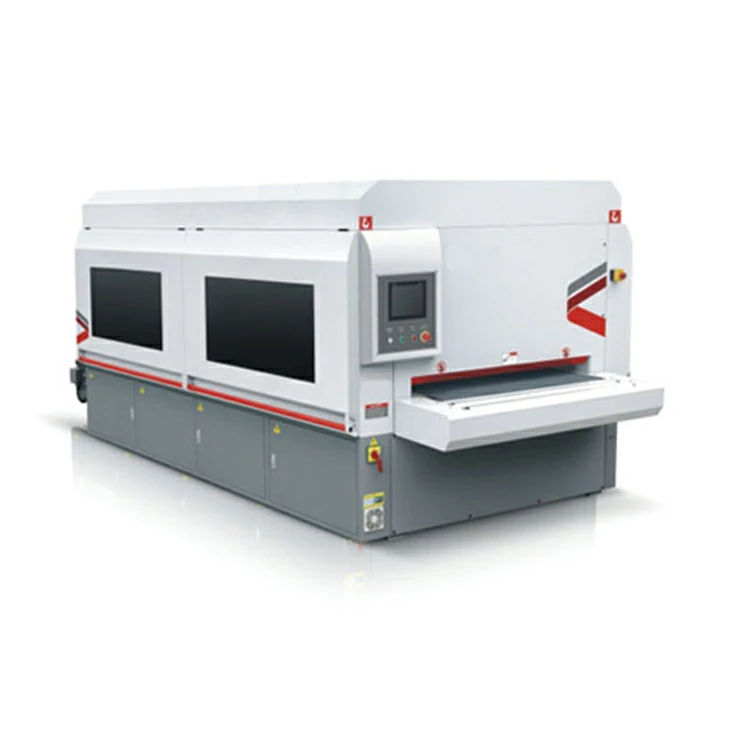
The SW1300 is a modular wide belt profile sander for broad wooden panels that combine flat areas, grooves, raised details, edges, and shaped transitions. Different sanding groups can be arranged for bare wood or primer sanding based on the workpiece geometry and the required finish.
For wood doors, cabinet fronts, relief panels and profiled furniture components
Configurable oscillating rollers, rotary discs, and contact roller or belt units
Workpiece and finish review required before the final configuration is confirmed
A wide belt profile sander combines conveyor-fed panel handling with multiple sanding mechanisms that contact different surface zones. On the SW1300 series, the selected layout may include transverse or spiral oscillating rollers, rotary disc units, and a heavy contact roller or belt unit. The final arrangement depends on the panel shape, sanding positions, abrasive sequence, and required finish.
Best Fit
Broad wood components with a mix of flat and profiled areas that cannot be processed consistently by one sanding head alone.
Verified Surface Types
The supplied brochure identifies bare wood and primer surfaces. Other coated or synthetic surfaces require an abrasive and workpiece test.
Processing Boundary
Very deep, narrow or inaccessible details may still require a different sanding unit or manual touch-up after testing.
Workpiece Geometry
What Panel Surfaces Can the SW1300 Process?
The machine is configured around the geometry of the workpiece. Different sanding groups are selected to reach accessible flat areas, grooves, raised profiles, edges, and transitions without relying on one contact direction.
Broad Flat Areas
Contact roller or belt units establish an even base surface across accessible panel faces.
Grooves and Recesses
Disc or brush-type units can be used for accessible milling details and shallow groove areas.
Raised and Curved Profiles
Oscillating and multi-directional contact helps follow shaped surface transitions.
Edges and Transitions
The unit sequence is selected to reduce uneven sanding where flat and profiled zones meet.
Working Principle
How Does the SW1300 Profile Sanding Process Work?
The configured sanding groups process different surface zones in sequence as the panel moves through the machine. Abrasive type, grit, contact pressure, unit speed and conveyor speed must be established through workpiece evaluation.
Review the Workpiece
Confirm the material, dimensions, profile depth, starting surface and required finish.
Feed and Hold
Place the panel on the conveyor. The vacuum worktable helps stabilize suitable workpieces during feeding.
Sand in Sequence
The selected roller, disc and belt units contact their target zones using different motion and contact directions.
Inspect and Adjust
Check the discharged panel, then refine abrasives and settings until the required sample finish is achieved.
Configuration Logic
How Is the SW1300 Sanding Configuration Selected?
The supplied brochure illustrates four layouts—SW1300-EHPCC, SW1300-TTPCC, SW1300-AHPCC, and SW1300-AACC. These are configuration examples, not one machine equipped with every sanding unit. The exact unit sequence and included equipment must be stated in the final quotation.
Map the geometry: flat areas, grooves, recesses, curves, edges, and profile depth.
Mark the sanding zones: identify which areas require abrasive contact and which must be protected.
Select the mechanisms: match each zone with a suitable roller, disc, or belt, and indicate the contact direction.
Confirm the sequence: test abrasives, grit progression, pressure, speed, and finish on a sample.
SW1300–EHPCC
SW1300–TTPCC
SW1300–AHPCC
SW1300–AACC
Sanding Structures
Main Sanding Units Available for the SW1300 Series
The SW1300 platform can combine different sanding structures according to the workpiece geometry and finish target. The six units below are shown in the supplied brochure; their quantity and sequence vary by configuration.
Transverse Oscillating Sanding Unit
Uses a horizontal roller arrangement with oscillating motion to contact broad surfaces and selected profile zones.
Oscillating Disc Sanding Unit
Uses multiple disc heads to approach reachable grooves, curves and shaped transitions from several contact points.
Dual-Station Transverse Sanding Unit
Two transverse stations can be arranged for staged sanding with different abrasives or contact conditions.
Spiral Oscillating Sanding Unit
Spiral abrasive rollers combine patterned contact with oscillation for profiled surfaces and repeated transitions.
Planetary Rotary Disc Sanding Unit
Combines revolution and self-rotation so the abrasive heads approach panel details from changing directions.
Heavy Contact Roller and Wide Belt Unit
Provides controlled abrasive contact across accessible broad flat and semi-flat areas before or after profile sanding.
Key Feature
Key Features of the SW1300 Wide Belt Profile Sander
The machine combines modular sanding groups with service-access features and PLC control. Each feature below should be supported by the matching close-up image rather than a generic factory photo.
Pull-Out Sanding Assemblies
Selected sanding assemblies can be pulled out to improve access during abrasive replacement or servicing.
Oscillating Contact Motion
Oscillating or reciprocating movement changes the contact path and supports more even sanding across reachable profiles.
Quick-Change Disc Interface
The disc sanding head uses a quick-change interface to make abrasive replacement more direct.
PLC Touchscreen Control
The touchscreen provides one interface for operating and adjusting the configured sanding groups and conveyor settings.
Vacuum Conveyor Worktable
The vacuum worktable helps stabilize suitable panels, including narrower workpieces, during conveyor feeding.
Workpiece-Based Modular Layout
Sanding units are selected and sequenced according to the areas that must be reached and the finish required.
Mechanical Parameters
Mechanical Parameters of SW1300 Wide Belt Profile Sander
Technical buyers can review the main specifications of the SW1300 Wide Belt Profile Sander, including working width, feed thickness, feed speed, motor configuration, total power, dimensions, and machine weight.
Item
Specification
Machine name
SW1300 Wide Belt Profile Sander
Equipment type
SW1300-EHPCC-X
Workpiece width
100-1250mm
Thickness range of workpiece
5-100mm
Feeding speed
1-18m/min
Double horizontal sanding
1 Set 120mm x2
Horizontal Sanding roller
——
Common rotation disc sand
1 set Ø130mm
Upper and lower rollers
5 x 1.5kW, 380V, 50Hz, 1400rpm
Rotation Sand disc
1 set Ø130mm
Abrasive brush roller
2 set Ø130mm
The minimum length of workpiece
500 mm
Vacuum suction fan power
7.5KW
Suction port
Ø125 x 7; Ø160 x 1
Working pressure
0.6-0.8MPa
Gas consumption
0,4Nm³/min
Power
380V 5OHz
Total power
29Kw
Outline dimension
4600x2300x2150mm
Weight
5340Kg
Final machine specifications may vary according to the confirmed configuration. Please contact LINKYOU to confirm voltage, motor configuration, sanding unit setup, and production requirements before ordering.
What Wood Products Can Be Evaluated for SW1300 Sanding?
The SW1300 is intended for broad profiled components. Suitability depends on the panel size, profile depth, sanding access and surface condition, so representative workpieces should be tested before the final layout is selected.
Solid Wood Doors
Evaluate broad door faces, routed details, raised panels and transitions before staining or coating.
Cabinet Doors and Fronts
Process accessible frames, shallow recesses, decorative routing and surface transitions.
Relief and Decorative Panels
Select multi-directional sanding units for repeated profiles, carved patterns and reachable recesses.
Profiled Furniture Components
Prepare selected drawer fronts, decorative panels and wide furniture parts for the next finishing stage.
Selection Evidence
What Information Is Needed for a Sanding Test?
A useful configuration recommendation starts with the actual workpiece rather than the model name alone. Send the following information so the sanding zones and unit sequence can be reviewed.
Frequently Asked Questions
Frequently Asked Questions About the SW1300-Wide Belt Profile Sander
Find quick answers about workpiece suitability, sanding configuration, abrasive selection, sample testing, and quotation requirements.
What materials can the SW1300 sand?
The supplied brochure identifies bare wood and primer surfaces. PVC, painted or other coated panels should only be confirmed after checking the coating, abrasive, and finish requirements on a representative sample.
Are all six sanding units included as standard?
No. The brochure shows available sanding structures and several configuration codes. The quotation must state the exact units, quantity, and sequence included in the selected machine.
How are abrasive type and grit selected?
They are selected according to the material, starting surface, profile shape, and required finish. A sample test should confirm the grit progression, pressure, and operating speeds.
Can narrow panels be processed?
The brochure notes that the vacuum worktable supports narrow workpieces. The actual minimum size and holding stability must be confirmed for the selected configuration.
Can one machine sand both flat and profiled areas?
Yes, when the machine is configured with complementary belt, roller, and disc units. The reachable areas and finish consistency depend on the workpiece geometry and selected unit sequence.
Can the SW1300 completely replace manual sanding?
It can reduce repetitive sanding on accessible areas, but deep, narrow, or shielded details may still require another unit, a second process, or manual touch-up.
Why is a workpiece test recommended?
A test shows whether each target area can be reached and helps verify the sanding sequence before the machine configuration is finalized.
What is required for a quotation?
Provide drawings, photos, material, dimensions, sanding zones, current surface, finish target, capacity and destination electrical supply.
REQUEST A MACHINE CONFIGURATION
Which SW1300 Configuration Fits Your Workpiece?
Send your workpiece photos or drawings and mark the areas that require sanding. Include the material, dimensions, profile depth, current surface, required finish and target production capacity. LINKYOU will review the application and recommend a suitable sanding-unit layout for testing and quotation.
Workpiece and profile review
Sanding-unit configuration advice
Machine quotation and technical proposal
Scroll to Top
LINKYOU · EQUIPMENT INQUIRY
Start with
your project
Share the essentials first. You may add drawings, photos, or more technical details when they are available.
Share your requirement
Machine, application and project goal
Add details if available
Workpiece, layout, drawing or photos
Discuss the next step
Our team reviews your inquiry details
For a line-layout review
Add panel size, thickness, weight, conveyor direction, and any required 90 ° or 180° transfer.
Tell Us About Your Project
Fields marked with * are required.
LINKYOU · EQUIPMENT INQUIRY
Start with
your project
Share the essentials first. You may add drawings, photos, or more technical details when they are available.
Share your requirement
Machine, application and project goal
Add details if available
Workpiece, layout, drawing or photos
Discuss the next step
Our team reviews your inquiry details
For a line-layout review
Add panel size, thickness, weight, conveyor direction, and any required 90 ° or 180° transfer.