
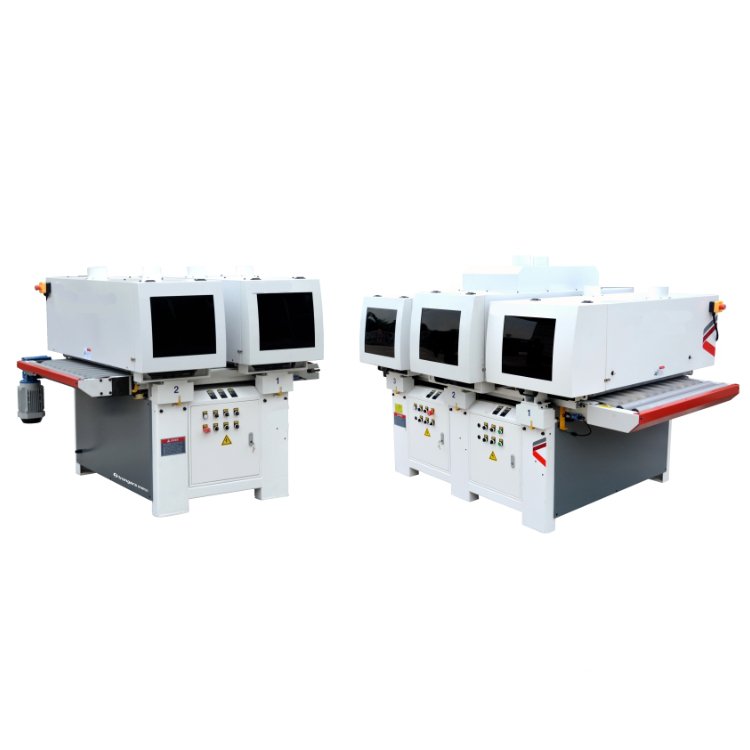
SW1300-PCC Modular Combined Profile Sander
The LINKYOU SW1300-PCC is a modular combined profile sander designed for wood components with flat, grooved, contoured, and irregular surfaces. It can be configured with E sanding wheel units, C straight roller sanding units, and P rotating sanding roller units.
The unit type, installation position, and arrangement sequence are selected based on the workpiece shape and the specific areas requiring sanding. This allows different sections of the workpiece to be processed during continuous feeding.
- Anchor navigation
- Quick Answer
What Is a Modular Combined Profile Sander?
- A modular combined profile sander is an automatic woodworking machine that combines different sanding units according to the shape of the workpiece and the positions that require sanding.
- Unlike a machine with one fixed sanding structure, the SW1300-PCC can use different E, C and P unit arrangements to provide suitable abrasive contact directions for flat areas, straight profiles, grooves, edges and compatible contoured surfaces.
Note:The machine is designed to follow compatible surface profiles and reduce repetitive manual sanding. It is not intended to calibrate panel thickness in the same way as a wide-belt calibrating sander.
- Mechanical Parameters
Mechanical Parameters of
SW350DM-W4C5
Technical buyers can review the main specifications of the SW350DM-W4C5 four sides sander machine, including working width, feeding thickness, feeding speed, motor configuration, total power, dimensions, and machine weight.
Item
Specification
Machine name
Combined Profile Sander
Equipment type
SW1300-PCC
Working width
100~1000MM
Max. thinckness
5~90MM
Min. Working length
500MM
Rotation sand disc
1 Set 12*∅130MM
Abrasive brush roller
2 Set∅380*1000mm
Total power
6.5KW
Dimension
2350*2200*2000mm
Weight
1500kg
Final machine specifications may vary according to the confirmed configuration. Please contact LINKYOU to confirm voltage, motor configuration, sanding unit setup, and production requirements before ordering.
- E C P sanding units
How Do the E, C, and P Sanding Units Differ?
Each unit uses a different sanding-contact pattern. Their sequence should be matched to the shape of the workpiece and the exact areas that require sanding.
E — Sanding
Wheel Unit
C — Straight Roller Sanding Unit
P — Rotary Sanding Roller Unit
How Is the Sanding-Unit Layout Selected?
Flat surfaces, grooves, curves, edges, and decorative profiles do not always require the same contact direction. LINKYOU reviews the workpiece before recommending the sanding-unit sequence and abrasive setup.
Review the
Workpiece
Confirm material, dimensions, grooves, curves, edges, and profile depth.
Mark Sanding
Areas
Identify the flat surfaces, recesses, transitions, and edges that require abrasive contact.
Select E C
or P
Match each sanding area with a suitable mechanism and contact direction.
Confirm the Layout
Set the unit sequence, abrasive type, grit, feed speed, and processing conditions through evaluation.

Why Are Different Sanding Unit Layouts Required?
A workpiece dominated by broad surfaces may require more straight-roller contact, while a panel with grooves, curves, edges, or decorative profiles may need rotary or wheel-type units to approach selected areas from different directions. The final layout must be based on the actual workpiece, not the model name alone.
- PCC working principle
How Does the SW1300-PCC Combined Profile Sander Work?
The SW1300-PCC conveys the workpiece through one P rotary sanding roller unit and two C straight roller sanding units. Each station performs a different sanding task, allowing the surface to be processed progressively in one feeding cycle.

- Workpiece Feeding
Set feed conditions for material, size, profile, and starting surface.

-
P Rotary
Sanding
Approaches selected grooves, curves, edges, and profile transitions.

- C1 Surface Sanding
Provides stable contact on broader accessible areas and shallow contours.

- C2 Refining
Uses the selected abrasive grit for progressive surface preparation.

- Discharge
Inspect the surface and adjust abrasives, speed, or pressure if required.

- Machine Feature
Key Features of the SW1300-PCC Profile Sander
The SW1300-PCC combines one P rotary sanding roller unit with two C straight roller sanding units to process different areas of profiled wood components in sequence. Its modular design allows E, C, and P units to be reviewed according to the workpiece shape, sanding position, surface condition, and required finish, helping manufacturers improve consistency across accessible surfaces while reducing repetitive manual sanding.

Workpiece-Based Configuration
E, C, and P sanding units can be arranged according to the workpiece shape and the exact surface positions that require sanding.

Targeted Sanding of Different Positions
Different sanding mechanisms approach flat surfaces, grooves, edges, curves, and profile transitions in different ways.

Progressive Sanding Process
Multiple sanding stations perform different tasks in sequence, supporting progressive surface preparation during one feeding process.

Adjustable Processing Conditions
Feeding and sanding settings can be coordinated with the material, abrasive grit, profile shape, and required surface result.

Suitable for Profiled Wood Components
The machine can be evaluated for wood doors, cabinet doors, furniture panels, decorative components, and other wide profiled workpieces.

Sample-Based Configuration Review
Workpiece photos, drawings, or physical samples can be reviewed before the sanding-unit layout and abrasive specification are confirmed.
- Applications
What Wood Products Can the SW1300-PCC Process?
The SW1300-PCC is designed for wide wood components that combine flat surfaces, grooves, edges, curves, and decorative profiles. The sanding-unit arrangement should be selected according to the workpiece shape, the areas requiring sanding, and the required surface finish.

Wood
Doors
Suitable for sanding accessible flat areas, decorative grooves, raised or recessed profiles, edges, and surface transitions on solid wood, MDF, or composite wood doors.

Cabinet
Doors
Designed for cabinet fronts and framed door panels with flat sections, shallow recesses, routed details, and shaped profile transitions.

Furniture
Panels
Suitable for selected furniture panels, drawer fronts, decorative components, and wide profiled parts requiring consistent surface preparation before finishing.

Decorative Profiled Components
Different E, C, and P layouts can be evaluated for wide wood components with grooves, curves, edges, and decorative surface patterns.
- Frequently Asked Questions
Frequently Asked Questions About the SW1300-PCC
These answers focus on machine selection and workpiece fit. Keep the same visible questions and answers if FAQ structured data is added.
What materials can the SW1300-PCC process?
It can be evaluated for solid wood, MDF, plywood, and selected composite wood components. Material density, coating condition, profile geometry, and the required finish should be checked before confirming the abrasive and operating settings.
Can it sand both flat and profiled surfaces?
The P and C units are intended to contact different accessible areas, including broader surfaces, shallow contours, grooves, curves, edges, and transitions. Very deep, narrow, or enclosed details may still require a different tool or manual touch-up
How is the E, C, and P configuration selected?
Selection begins with the workpiece material, dimensions, profile drawing, areas requiring sanding, starting surface condition, and target finish. Each sanding position is then matched with a suitable contact mechanism and unit sequence.
Can the machine completely replace manual sanding?
It can reduce repetitive manual sanding on areas that the selected units can reach consistently. Complex corners, deep recesses, enclosed details, or special finishing requirements may still need manual processing or another dedicated module.
How should the abrasive grit be selected?
Abrasive type and grit depend on the material, defect depth, coating or primer condition, profile shape, and required finish. A staged grit combination should be confirmed through workpiece evaluation rather than selected from a universal rule.
Should my workpiece be evaluated before ordering?
Yes. Send clear photos, drawings, dimensions, profile depth, and marked sanding areas. A physical sample may also be useful when the profile or finish cannot be reliably judged from photos alone.
Can the SW1300-PCC be integrated into an automated line?
Integration must be confirmed from the required line speed, workpiece orientation, upstream and downstream equipment, transfer height, electrical interface, and safety requirements.
What information is required for a quotation?
Provide the workpiece material, dimensions, profile drawing, sanding positions, current surface condition, required finish, target capacity, destination voltage, and available workpiece photos or samples.
- REQUEST A MACHINE CONFIGURATION
Which SW1300 Sanding Configuration Fits Your Workpiece?
- Send us photos or drawings of your workpiece and indicate the areas that require sanding. Please include the material, dimensions, profile depth, current surface condition, required finish, and target production capacity.
- LINKYOU will review the workpiece and recommend a suitable E, C, and P sanding-unit arrangement.
- Workpiece and profile review
- Sanding-unit configuration advice
- Machine quotation and technical proposal